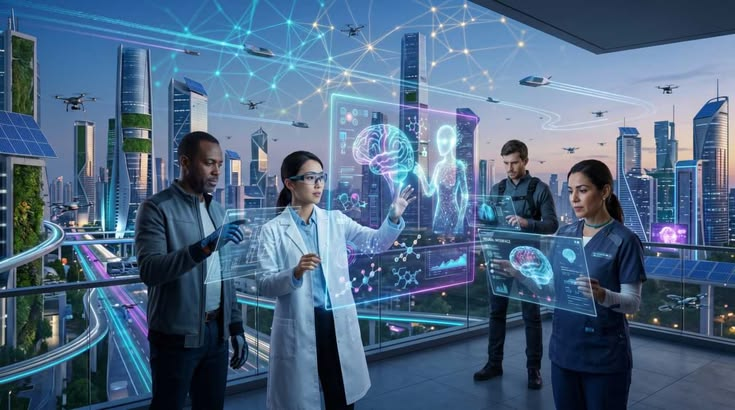

https://techbowa.com/category/tech-news/https://techbowa.com/category/tech-news/https://techbowa.com/category/tech-news/https://techbowa.com/category/tech-news/https://techbowa.com/category/tech-news/https://techbowa.com/category/tech-news/https://techbowa.com/category/tech-news/The speed at which digital innovations are hitting the global market is dizzying. We have officially crossed the threshold from experimental digital upgrades into an era where software, hardware, and physical architecture adapt dynamically to human intent. As we navigate the current landscape, these innovations are reshaping global economies, restructuring corporate operating models, and fundamentally altering how we interact with information.
From the rise of intent-driven software architectures to the deployment of physical AI, here is a breakdown of the latest digital innovations defining the frontier of technology.
1. Intent-Driven Software and Self-Assembling Code
The paradigm of software development has shifted dramatically. The tech world is moving rapidly from an era of manual programming to a new system where human developers focus on expressing intent rather than writing syntax.
The Autonomously Maintained Digital Infrastructure
Generative AI models have evolved beyond simply assisting with coding snippets. The latest innovation centers on AI engines capable of self-assembling entire modular enterprise applications. Developers simply describe a desired business outcome or structural workflow, and the AI autonomously writes, tests, debugs, and deploys the entire stack. These applications are also “self-healing,” automatically detecting anomalies or out-of-date dependencies within their code base and rewriting themselves to optimize stability.
2. Multi-Vision Smart Glasses and the Ambient UI
The concept of digital interaction is breaking out of the traditional boundaries of handheld glass screens and desktop monitors.
[Diagram representing ambient user interfaces mapping to human visual fields]
Context-Aware Wearables
The newest generation of Multi-Vision Smart Glasses acts as an invisible layer over daily life. Equipped with miniaturized flat metalenses, ultra-light sensors, and on-device computer vision, these wearables process real-time visual and auditory inputs. Instead of looking down at a mobile device, users receive contextual, real-time translations, immediate navigation updates, and facial or object recognition data mapped directly onto their physical field of view.
3. Physical AI: The Real-World Convergence of Brains and Robotics
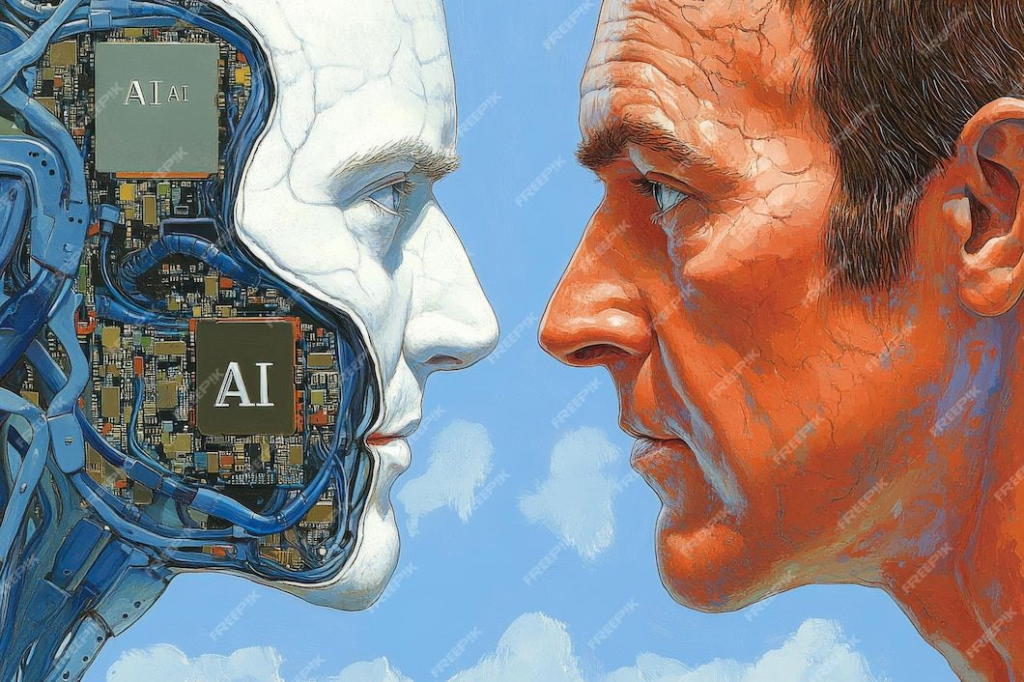
Intelligence is no longer confined to digital dashboards and remote servers. One of the most disruptive innovations is the physical embodiment of advanced AI models into kinetic machinery.
Spatial Robotics in Complex Logistics
Major fulfillment centers and automotive factories are scaling the deployment of unified AI fleets. Rather than operating as isolated, pre-programmed units, these robots use collective “fleet learning” models to coordinate movement, dynamic routing, and inventory management in real time. They learn from the physical adjustments made by one machine across the globe, updating the operational pathways for thousands of other devices instantly.
4. Decentralized Edge Intelligence and Cloud 3.0
The massive surge in global digital data has forced an architectural upgrade from standard centralized cloud frameworks to diversified, localized infrastructure.
| Architecture Type | Primary Processing Site | Data Processing Goal |
| Traditional Cloud | Remote Data Centers | Long-term data aggregation & heavy historical analytics |
| Cloud 3.0 / Sovereign Cloud | Regionalized & Compliant Networks | Data residency protection & strict regulatory compliance |
| Edge Intelligence | On-Device/Local Processors | Real-time, zero-latency contextual inference |
Latency Reduction via Edge Nodes
By deploying sophisticated, scaled-down AI models directly onto local edge devices, smart infrastructure can instantly make split-second operational decisions. This localized data handling keeps sensitive data safe within domestic regional boundaries while eliminating the massive network latency caused by pinging remote servers halfway across the world.
5. Personhood Credentials and the Verification Layer
With generative algorithms capable of producing highly realistic digital clones, deepfake audio, and synthetic media, the open internet faces a trust crisis.
- Authenticity Verification Engines: To counter the flood of synthetic content, the tech industry is deploying cryptographic identity frameworks known as personhood credentials.
- Zero-Knowledge Architecture: These decentralized protocols allow individuals to prove their human identity and the structural authenticity of their digital files across the web without exposing any private or personal data to corporate platforms.
Conclusion: Adapting to the Velocity of Change
The latest digital innovations demonstrate that technology is no longer an external set of tools we use selectively; it is turning into an active, intelligent collaborator that operates silently in our environments. For modern organizations, the path forward requires moving away from patchwork digital integrations and focusing on building modular, secure, and highly adaptive infrastructures capable of scaling at the speed of tomorrow.